
For people who lead busy lives & long for greater spiritual depth.
A FREE monthly spiritual publication with daily reflections to challenge and inspire you.
Subscribe now to:
- Receive a monthly email with a PDF of The Monastic Way
- Participate in monthly Zoom reflections with other seekers like you.
October 2026: Enriched by Beauty
Confucius may have said it best: “Everything has beauty,” he taught, “but not everyone sees it.” Seeing it, the spiritual person knows, is the task of a lifetime. It is also the reward of a lifetime well- lived, lived in balance, lived from the inside out as well as from the outside in.
Unfortunately, this culture does not teach beauty in its schools nor require it in its programs. Most of all, it does not prescribe it for its healing value.
The value of beauty in shaping the soul, let alone in curing the ills that a lack of beauty brings on, we ignore. In a plastic world, frenzied by its pursuit of money or dried to the bone by the lack of it, the whole of life is cheapened, devalued. Then the collectibles of life take precedence over its joys.
Striving trumps achievement. Nothing is ever enough. Only consumption brings a sense of success in life.
And so life goes by, a merry-go-round of toys gotten or yet to get. Just for the sake of having them. Whether they bring anything of internal value in return is seldom factored into the equation.
Without obeisance to the God of More, materialism says, how can we ever say that life has been worth it? How else will we come to know that life has value in itself? How will we ever learn that life lived in pursuit of beauty has been lived beautifully?
Too often, we miss the obvious: beauty is meant to enable us to transcend the mundane, to escape the frivolous, to save us from the toxicity of the cheap and tawdry.
Because of beauty, we may begin to see that the purpose of life is to make beauty possible. Beauty brings peace to the soul and satisfaction to the heart. It saves us from the stress that cacophony brings.
To be enriched by beauty is to have within us the sight of life that will never go away, that will never leave us empty. It is the sight of one single sunset that brings layers of life to every sunset thereafter.
When we begin to recognize beauty, to see it all around us, it has done its work on us. Steeped in beauty, we have become beautiful ourselves. We are calm now, uplifted, enriched by the world around us, deepened in our sensitivities, our vision of the world more finely honed. We become the beauty we have come to see everywhere.
Thursday, October 1: We do not possess what we yearn for; it possesses us. And therein lies the problem. What fixates us stands to drive out of us the consciousness of other worthwhile things in life. "There is only one big thing––desire," Willa Cather wrote. "And before it, when it is big, all is little."
Friday, October 2: A healthy life develops concerns and involvements in every area: spiritual, physical, emotional and intellectual. What we think about determines what we are.
Saturday, October 3: Interests don't come out of nowhere. They depend on the amount of time we give them in comparison to other dimensions of life. Unless we're careful, interests easily become fixations.
Sunday, October 4: To play computer games eight hours a day doesn't leave much time for anything else like sports or family or education or museums or reading or just good conversations with friends. To paraphrase the proverb—"all work and no play makes Jack a dull boy"—all one thing and nothing else makes Jack a dull boy.
Monday, October 5: What we spend our time on will even determine our social life and the kind of people with whom we associate. It can be wonderful; it can also be deadly dull.
Tuesday, October 6: The search for life is an excursion through a myriad of desires. We go from one to another, being enriched by all of them one way or another, until we begin to feel both stretched and at home. "Life," Alice Caldwell Rice says, "is made up of desires that seem big and vital one minute and little and absurd the next. Guess we get what's best for us in the end."
Wednesday, October 7: To be obsessed with one thing only as life goes by denies us the opportunity to enjoy everything else in life.
Thursday, October 8: Whatever it is that attracts us may well be the sign of ability in us as well as interest. "Our visions," Audre Lorde says, "begin with our desires."
Friday, October 9: If we want to deny ourselves the fullness of life, all we need to do is to explore only one dimension of it, however good it may be.
Saturday, October 10: The ideas and objects with which we feed the mind will determine what comes out of us in the end—in the way we live our lives, and in the nature of our pursuits. Why would we be surprised that the lust, for instance, that never becomes love comes out in pornography? As Helen Waddell says, "What was the desire of the flesh beside the desire of the mind?"
Sunday, October 11: To make any single thing in life my total preoccupation is to allow myself to be consumed by it. Then all judgment becomes skewed, all life is reduced to a minuscule sliver of itself, all the other gifts of life are reduced to nothing. As Adélia Prado put it, "Compared to my heart's desire/ the sea is a drop."
Monday, October 12: It is so easy to lose a sense of proportion in life. No single thing, however important, is all of life unless we make it so.
Tuesday, October 13: It's changing our minds about what's worthwhile in life that, in the end, makes all the difference.
Wednesday, October 14: The very act of becoming attracted to something brings with it the responsibility to control its place in our life instead of becoming gorged on it. Otherwise, it will control us; we will never be able to live an independent life ourselves.
Thursday, October 15: One of the pitfalls of attraction lies in the fact that we can become irritated with anyone else who has what we want. The attraction itself enslaves us to ourselves.
Friday, October 16: Just because we think we like a thing does not mean that it's good for us. An attraction must be explored, not simply absorbed into our lives uncritically. Otherwise, we may find ourselves immersed in the useless, the mundane or the superficially beguiling. "Desire," said Marie de France, "can blind us to the hazards of our enterprises."
Saturday, October 17: If we like what we see, it is more than worth it to stop and take another look.
Sunday, October 18: The worst error in life is to make ourselves like the wrong person, the wrong job, the wrong path rather than to trust our interests and our talents.
Monday, October 19: Don't worry too much about making wrong choices in life. Just keep going, keep looking, keep trying things out till you feel the glue on your feet. Then stop and test it for awhile. As the poet Rumi says, "What you seek is seeking you." Give it a chance and it will find you.
Tuesday, October 20: Be open to all of life but realize that it is best lived as a process of elimination. "The secret of happiness," Francis H. Bradley says, "is to admire without desiring."
Wednesday, October 21: Once you get what you're seeking, ask yourself what you are going to do with it once you have it and realize you don't want it after all. Point: Make sure you already live in a way that proves to you that life is bigger than any single thing, however good it may be.
Thursday, October 22: To be fully happy with something, we must be fully independent of it. André Gide says, "Complete possession is proved only by giving. All you are unable to give possesses you."
Friday, October 23: One of the best exercises in life is to make a list of all the things that make you happy. Now look at it. If anything on that list takes away from your intellectual development, personal development and ability to have friends, beauty, time, spiritual development, family, think carefully before you give yourself away to it.
Saturday, October 24: When the accumulation of things absorbs our spirit and our life, we may be living but we don't have a life. "It is preoccupation with possession, more than anything else" the philosopher Bertrand Russell writes, "that prevents people from living freely and nobly."
Sunday, October 25: The desire to accumulate leads us to hoard. We give ourselves to getting things whether we need them right now or not. Consumerism chokes our souls, drowns us in clutter, pollutes our free time, leaves us perpetually unhappy as we spend our lives with getting the next new thing rather than enjoying what we have.
Monday, October 26: Consumerism is destroying the globe: polluting the air, draining the oceans. "Consumption patterns," Wangari Maathai taught, "continue at the expense of the environment and peaceful co-existence. The choice is ours."
Tuesday, October 27: A capitalist economy tells us that to be happy we need to exchange money for the greatest number of goods we can get. A Christian life depends on our creating life out of love—love for others, love of beauty, love of nature and love of God. It requires us to exchange only those things that enable that kind of life for all. Judy Collins wrote: "Most of what we take as being important is not material whether it's music or feelings or love. They're things we can't really see or touch. They're not material, but they're vitally important to us."
Wednesday, October 28: Because we live in a world that counts happiness in the number of gadgets and gizmos and bling we get at every stage of life, it is possible that people who have every toy the world has to give can die unhappy. Epictetus puts it this way: "Wealth consists not in having great possessions but in having few wants."
Thursday, October 29: It isn't that having things makes a person unhappy. The problem is that not having things does the same thing and few people teach us that till it's too late.
Friday, October 30: How can we know what to have and what to get rid of? Easy. William Morris says, "Have nothing in your houses that you do not know to be useful or believe to be beautiful."
Saturday, October 31: It was only after Francis gave away his wealth that he began to sing to the sun and talk to the birds and understand the animals and sink into the beauty of nature and kiss the lepers and be fearless in the face of warlords and princes. The presence of a happy pauper in our midst is a very disarming event, a bold attack on everything a consumer society has to teach. If it is really possible to be happy without things then we have to begin to ask what things are all about and what we might be missing because of them.
Discussion Questions
1. What role has consumerism and materialism played in your life? How have you resisted the temptation towards buying more things instead of investing in beauty and in relationships?
2. Which daily quote in The Monastic Way is most meaningful to you? Why? Do you agree with it? Disagree? Did it inspire you? Challenge you? Raise questions for you?
3. After reading The Monastic Way, what is one way that you can put Sister Joan’s teachings into practice in your own life?
4. Joan Chittister uses other literature to reinforce and expand her writing. Find another quote, poem, story, song, art piece, novel that echoes the theme of this month’s Monastic Way.
5. Follow the advice Sister Joan gives on October 23: “One of the best exercises in life is to make a list of all the things that make you happy.” Did you find anything on the list that conflicts with your development or your relationships? If so, how can you change it?
Scripture
Canticle of Daniel 3:57-74, 89.
Bless God all you works of creation,
All creatures of the earth, bless God.
God of creation, we praise you forever.
All you heavens, sun, moon and stars,
All the universe, bless God.
God of creation, we praise you forever.
All you waters above the heavens
Every shower and dew, bless God.
God of creation, we praise you forever.
Frost and chill, ice and snow,
Fire and heat, bless God.
God of creation, we praise you forever.
Light and darkness, night and day,
Morning and evening, bless God.
God of creation, we praise you forever.
Give thanks to the Source of all blessing,
All the beauty of the earth, bless God.
God of creation, we praise you forever.
© Benedictine Sisters of Erie, PA.
Journal Prompts
1. Here are a few statements from this month’s Monastic Way. Choose one that is most helpful to you and journal with it.
• Unless we're careful, interests easily become fixations.
• It's changing our minds about what's worthwhile in life that, in the end, makes all the difference.
• If we like what we see, it is more than worth it to stop and take another look.
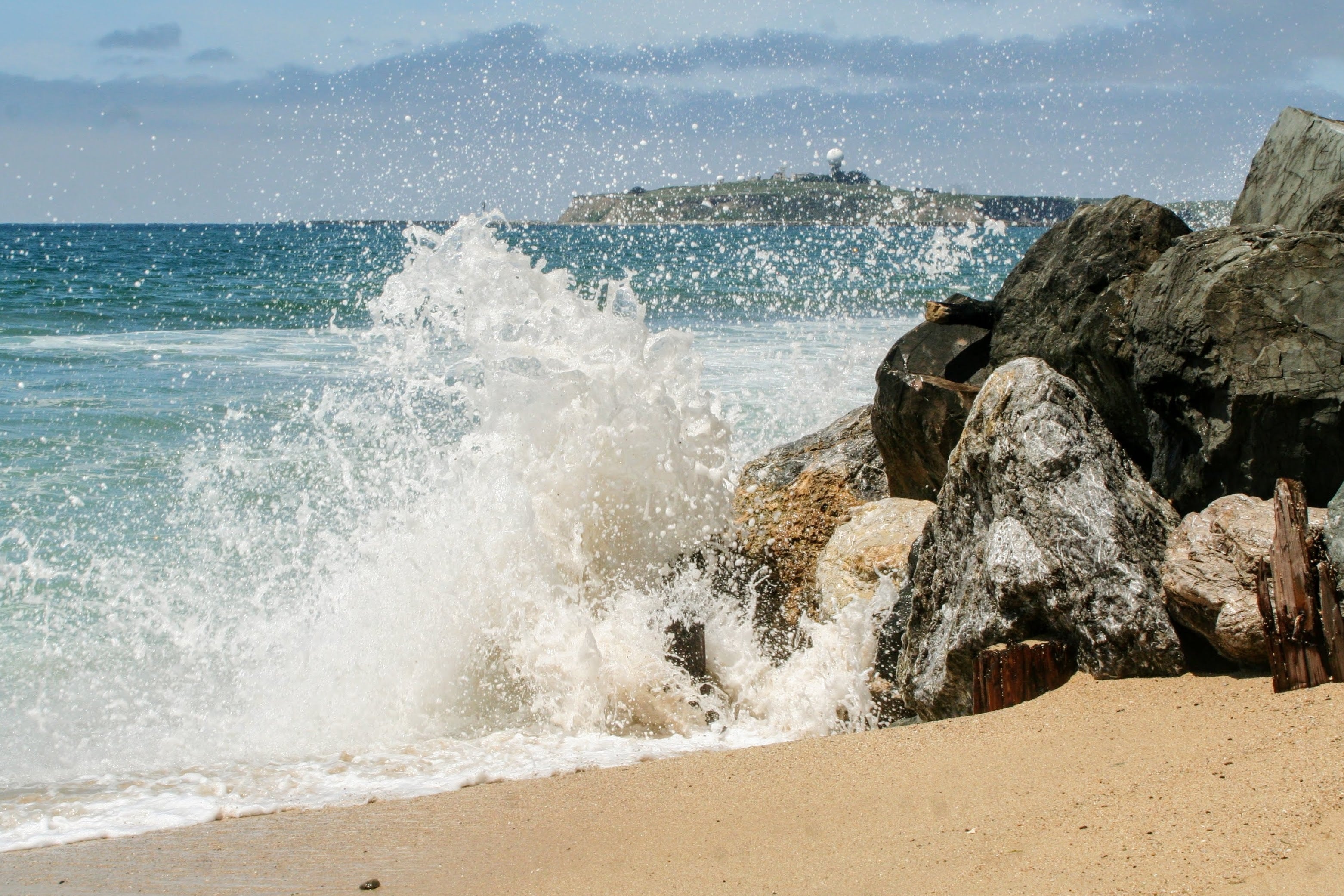
2. Spend a few minutes with this photograph and journal about its relationship to this month’s Monastic Way. You can do that with prose or a poem or a song or....
Prayer
In beauty I walk
With beauty before me I walk
With beauty behind me I walk
With beauty above me I walk
With beauty around me I walk
It has become beauty again
It has become beauty again
It has become beauty again
It has become beauty again
Diné (Navajo) prayer
The Monastic Way Newsletter